
The situation
Six problems turned up again and again — and every one of them was the same problem wearing a different hat.
- A diary kept on paper. One book, one set of handwriting, and no way to see it unless you were standing next to it.
- No central booking management. What was booked lived partly in the diary, partly in a mailbox and partly in somebody’s memory.
- Enquiries going unanswered. A request arrived by email and competed with everything else in the inbox. Some were answered days late; some were never answered at all.
- Billing done by hand. Invoices written one at a time after the fact, chased by hand and reconciled against the diary to work out who had actually paid.
- Reporting done by counting. Answering “how did the 3G do last month” meant reading the diary and adding up — so it mostly did not get asked.
- Double bookings. Two people taking bookings without a shared view of the diary put two hirers on the same pitch. The venue found out when both turned up.
Enquiries, in one place
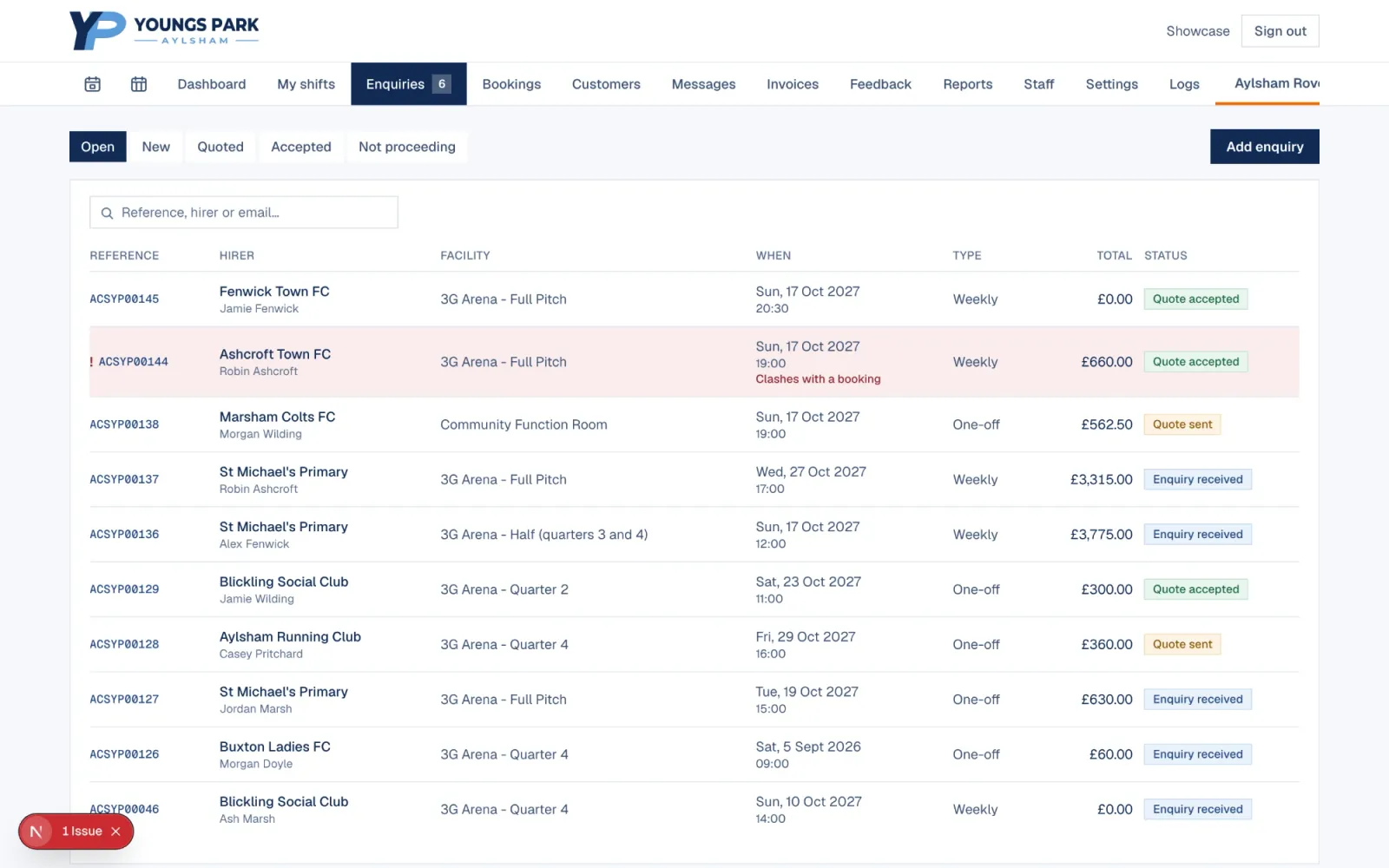
Every hire request arrives through a form on the website and lands in a panel with a status against each one — received, quoted, accepted, booked — rather than waiting in an inbox behind a supplier invoice. Each request is checked against the diary the moment it arrives, so a clash is flagged before anyone has replied to the hirer. The venue stops finding out on the Saturday.
One day, every facility
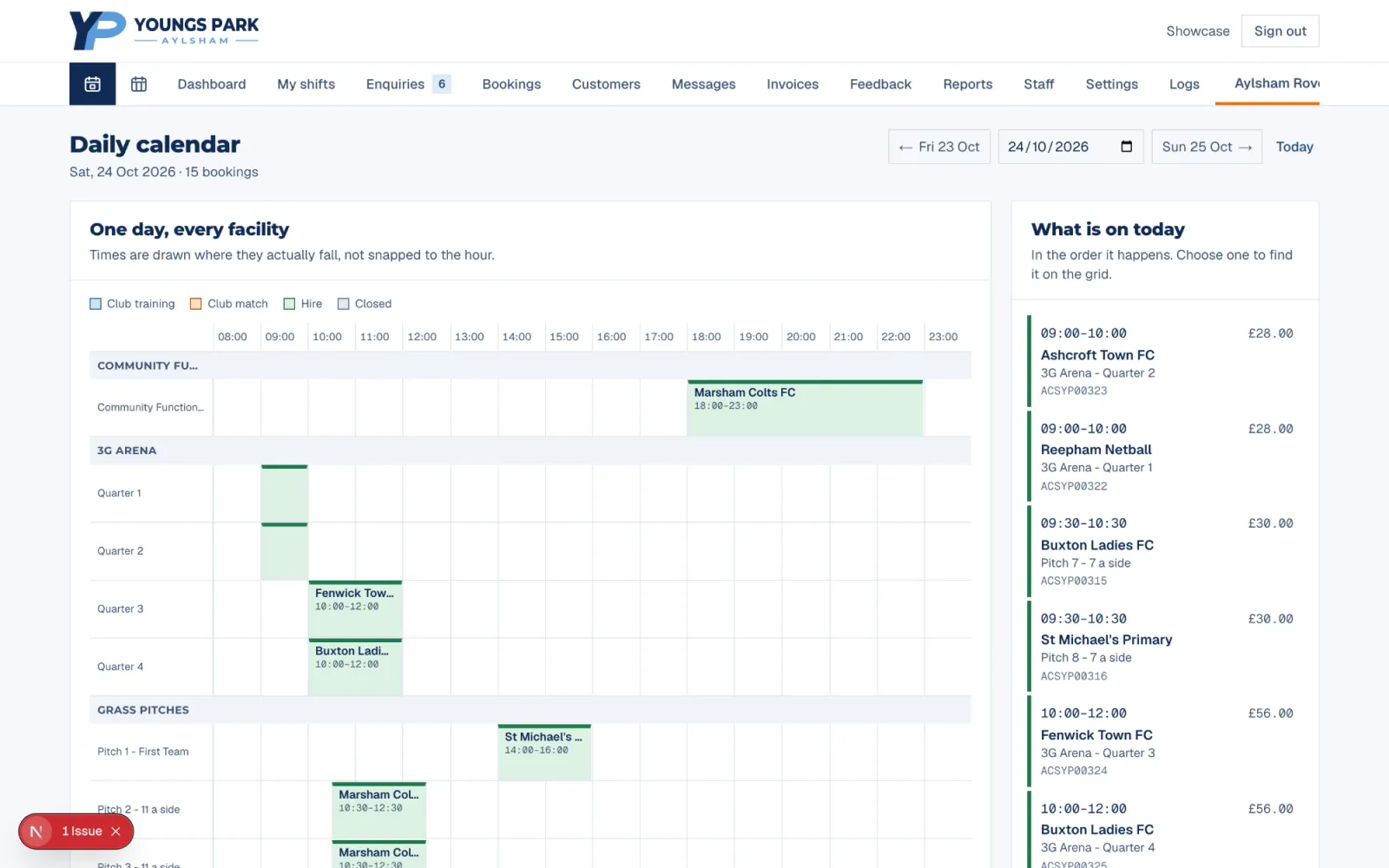
The whole site sits on one screen: the 3G in quarters, nine grass pitches, the hall and both changing rooms. Blocks are drawn to the minute rather than snapped to the hour, and anyone with a login sees the same diary at the same moment — from the office, the bar or the touchline.
The week ahead
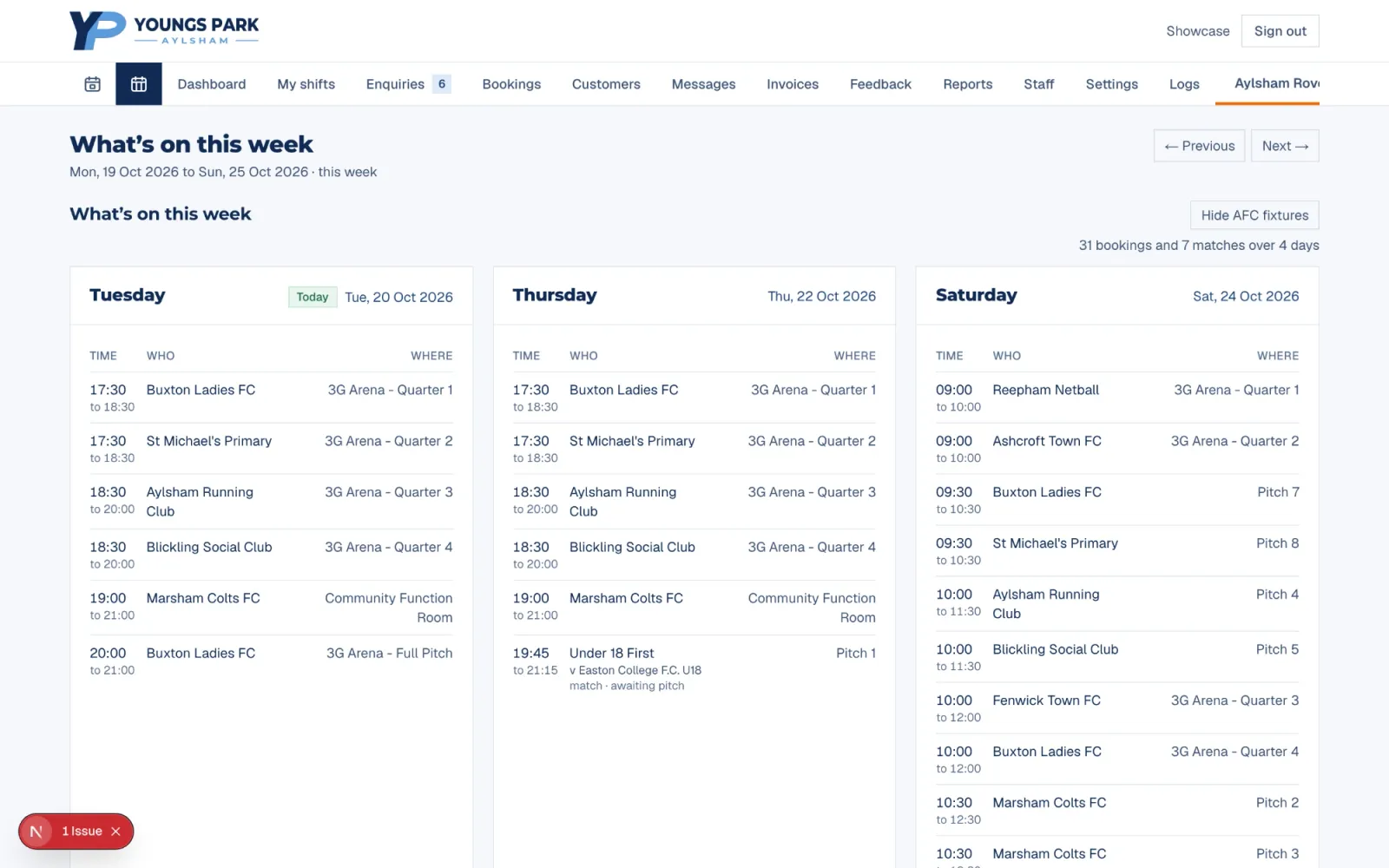
The same bookings pull into a week view, so a glance answers what is on and where. The resident football club’s fixtures arrive automatically from the club’s own system, so nobody retypes a season.
Invoices and payments
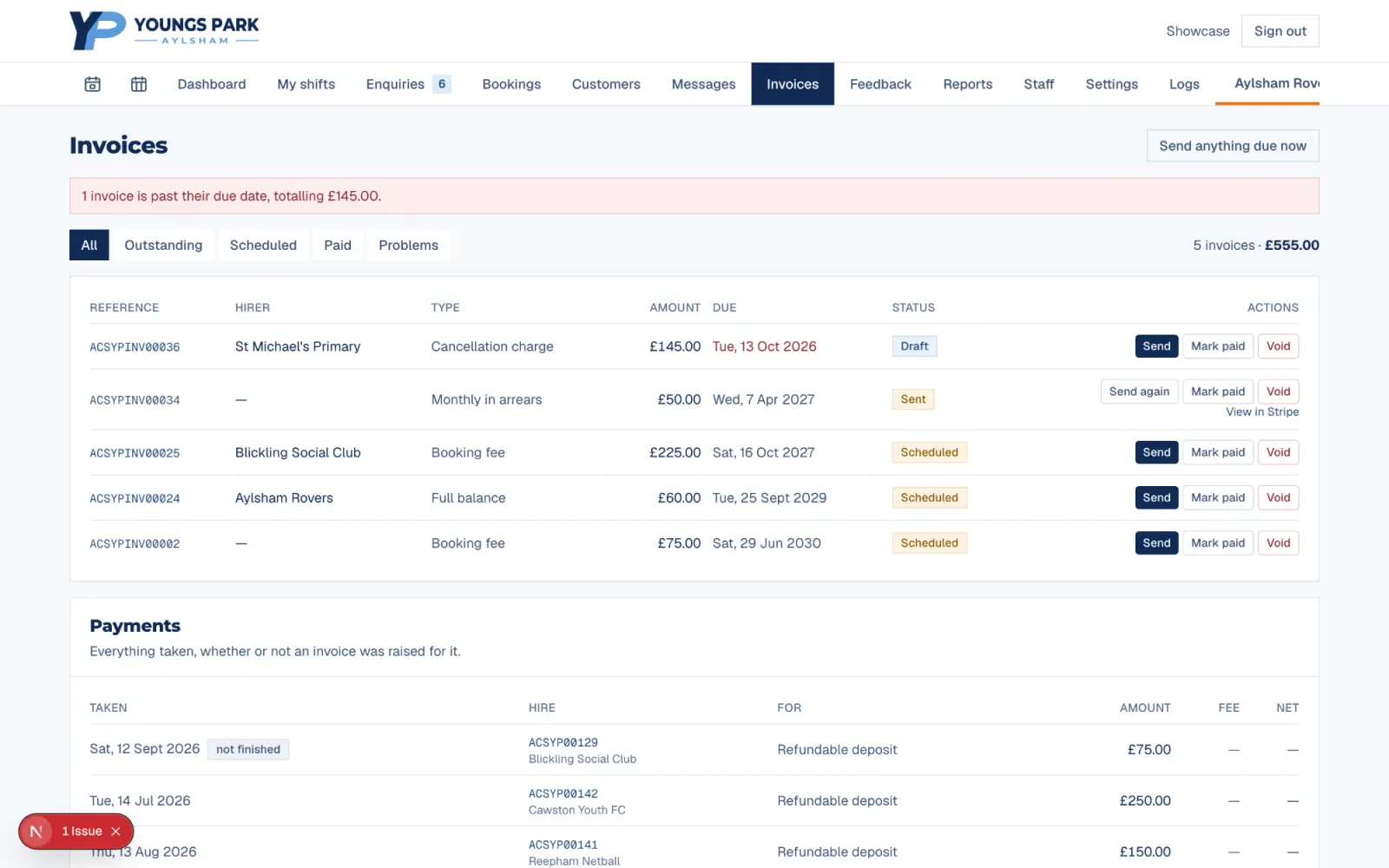
An invoice is scheduled the moment a booking is confirmed — raised a fortnight before the session, sent so the hirer sees it coming, and collected on the day it falls due from the card they saved. Everything taken is recorded whether or not an invoice was raised, so refundable deposits are a number somebody can read rather than one they work out. Card payments run through the venue’s own Stripe account, so the money never passes through anyone else.
Staff and hours
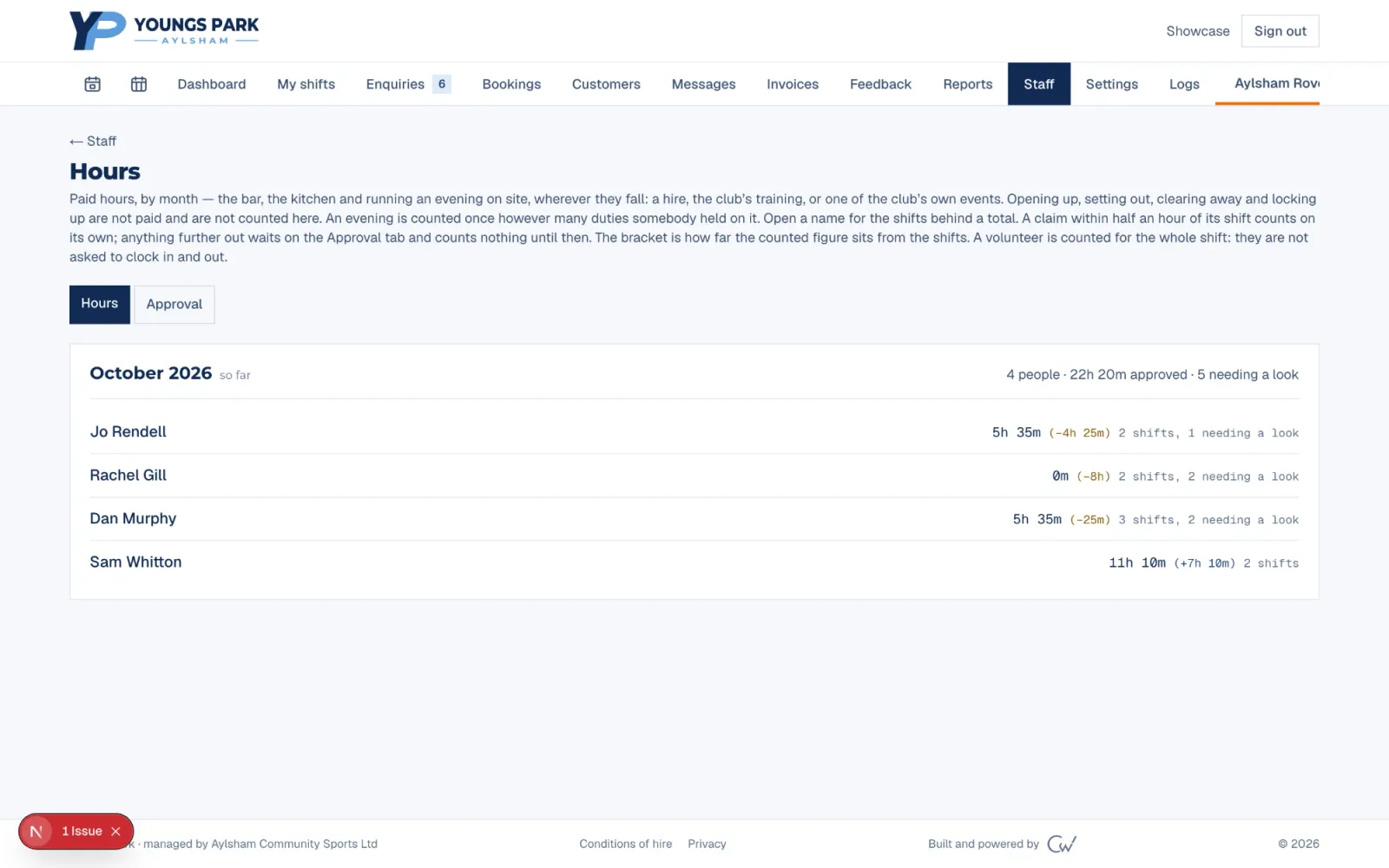
Staff are rostered onto sessions and clock in from their phones, and hirers get their own account with their bookings, invoices and documents. Paid hours are totalled by month, with any claim that needs a second look held for approval rather than counted automatically.
Where it stands
The system is live and running the venue. It handles the whole life of a hire: enquiry, quote, online acceptance of the conditions, allocation, staffing, invoice, payment and refund.
Screens of the system are captured from a demonstration copy — the hirers, fixtures and figures in it are invented, so no real club, person or price appears.
A twenty-facility venue that ran on a single paper diary now runs on one shared system — every enquiry answered, every booking visible to everyone at once, and every invoice raised against the session it covers and collected on time.
Six problems that looked separate were really one problem wearing different hats: no single shared system. Build the system, and all six go away together.
Running your operation from a diary and an inbox?
A Business Performance Review finds where the manual work and the missed money really sit.